What Are the Best Siding Types for Ohio Homes?
The best siding types for Ohio homes typically include vinyl siding, insulated vinyl siding, fiber cement siding, engineered wood siding, and composite siding. The right option depends on your budget, maintenance preferences, curb appeal goals, and how well the material handles Northeast Ohio weather.
What Is Siding?
Siding is the protective outer layer of your home. It helps guard against rain, wind, snow, pests, moisture, and energy loss. For Ohio homeowners, it also plays a big role in how your home looks, feels, and holds up through every season.
At The Third Estimate, siding is viewed as more than a fresh exterior upgrade. It is part of the system that helps keep your home dry, efficient, comfortable, and ready for Northeast Ohio weather.
In this ultimate guide to siding, The Third Estimate breaks down the most common siding types for Ohio homes, how local weather affects performance, when to repair or replace siding, and what to know before starting a siding project.
Common Siding Types for Ohio Homes
Homes in Northeast Ohio deal with lake-effect snow, freeze-thaw cycles, humidity, and strong seasonal temperature swings. That means siding materials that work well in warmer or drier climates may not always perform the same way in Ohio.
There is no single best siding material for every home. The right choice depends on your budget, style, maintenance preferences, energy goals, and the current condition of your home.
Here are some of the most common siding types for Ohio homes.
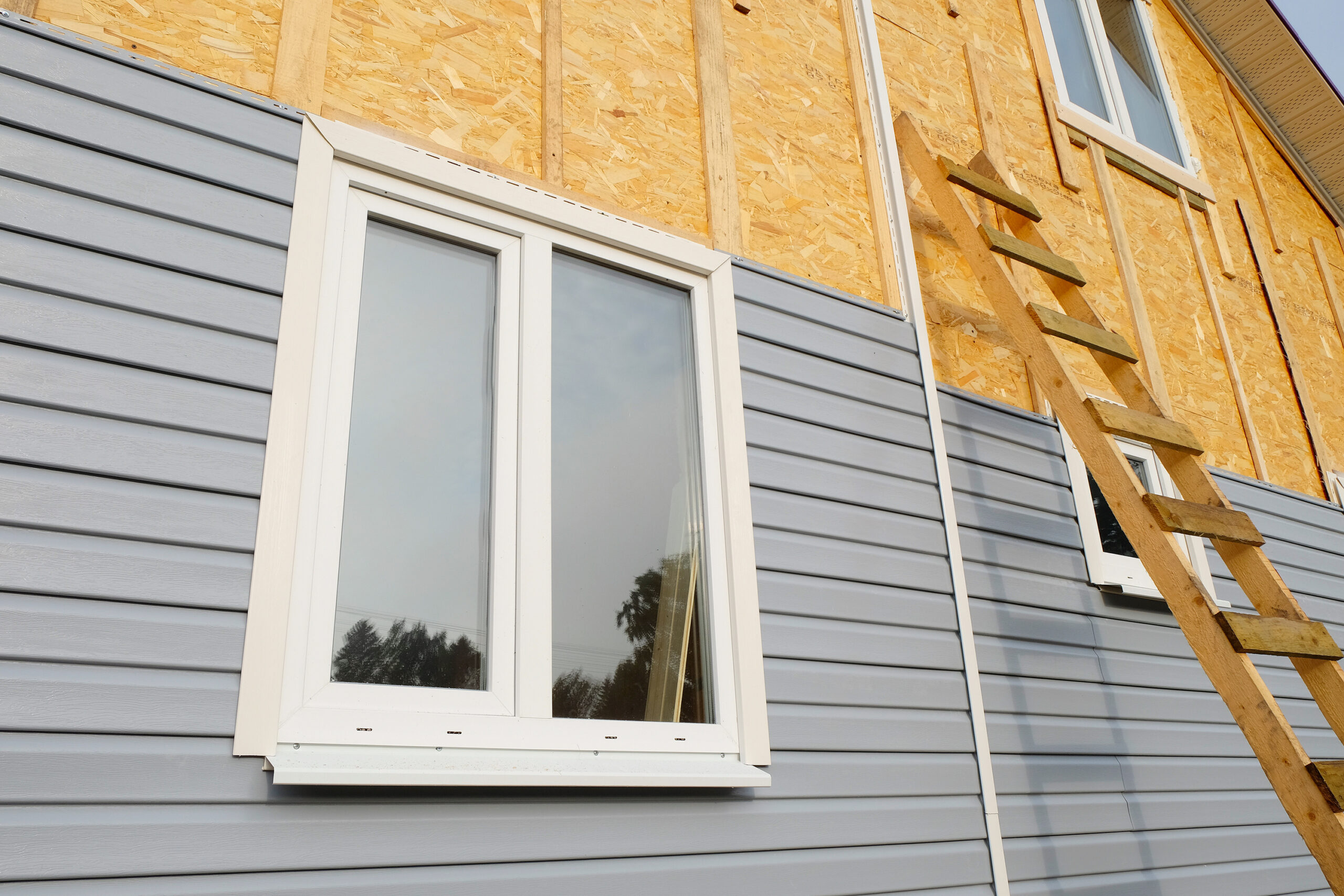
Vinyl Siding for Northeast Ohio Homes
Vinyl siding is one of the most popular options for Ohio homeowners. It is affordable, widely available, and low-maintenance.
It also comes in many colors, profiles, and textures, which makes it easy to match different home styles.
What are the benefits of vinyl siding?
Vinyl siding is often chosen because it offers:
- Lower maintenance
- No painting
- Strong color options
- Moisture resistance
- Budget-friendly pricing
- Easy cleaning
- Broad style availability
For many homeowners, vinyl siding provides a practical balance of cost, appearance, and performance.
What should homeowners know before choosing vinyl siding?
Vinyl siding expands and contracts as temperatures change. That means it needs to be installed with the right spacing and fastening.
If vinyl siding is nailed too tightly or installed poorly, it may buckle, wave, or pull away from the home.
Key takeaway: Vinyl siding can be a smart choice for Ohio homes, but installation quality is just as important as the product itself.
Insulated Vinyl Siding for Comfort and Efficiency
Insulated vinyl siding includes a foam backing attached to the siding panel. This added layer can improve panel strength and help support better comfort.
It is not the same as fully insulating your walls, but it can be a helpful upgrade during siding replacement.
Why does insulated siding work well in Ohio?
Insulated siding may help with:
- Draft reduction
- Better wall performance
- Improved comfort
- Stronger siding panels
- Noise reduction
- Added impact resistance
For older homes in Northeast Ohio, insulated siding may be worth considering if the exterior walls feel cold, drafty, or poorly protected.
The U.S. Department of Energy explains that insulation and moisture control both play important roles in home comfort and energy performance.
Fiber Cement Siding for Durability
Fiber cement siding is a strong material made from cement, sand, and cellulose fibers. It is known for durability and a more premium look.
Many homeowners choose fiber cement because it can look like painted wood without the same level of traditional wood maintenance.
What are the benefits of fiber cement siding?
Fiber cement siding may offer:
- Strong weather resistance
- Good pest resistance
- Long-lasting curb appeal
- Many color and texture options
- A solid, high-end appearance
- Better durability than some lighter materials
Fiber cement can be a strong choice for Ohio homes, especially when homeowners want a more substantial exterior finish.
What is James Hardie siding?
James Hardie siding, often called Hardie Board, is a popular fiber cement siding brand. It is known for strong durability, wood-look style options, and factory-finished color choices. James Hardie also offers climate-specific product guidance, which can be helpful for Ohio homeowners comparing siding options built for freeze-thaw cycles, moisture, and seasonal temperature swings.
What should homeowners know about fiber cement installation?
Fiber cement is heavier than vinyl siding and requires skilled installation. Clearances, flashing, fastening, and sealing must be handled carefully.
Poor installation can lead to moisture problems, product damage, or warranty concerns.
Key takeaway: Fiber cement siding can perform well in Ohio, but it should be installed by a contractor who understands the material.
Engineered Wood Siding for Style and Strength
Engineered wood siding gives homeowners the look of real wood with added durability. It is typically made from wood fibers, resins, and protective treatments.
This option can be a good fit for homeowners who want warmth, texture, and character.
Why do homeowners choose engineered wood siding?
Engineered wood siding may offer:
- A natural wood-like look
- Strong curb appeal
- Good impact resistance
- Multiple color options
- Design flexibility
- A more textured exterior finish
Like all siding products, engineered wood must be protected from moisture. Proper flashing, clearances, and edge sealing are important.
Composite Siding for Modern Exteriors
Composite siding is a broad category that can include materials made from resins, fibers, polymers, or other engineered components.
The goal is usually to provide strength, style, and weather resistance.
What are the benefits of composite siding?
Composite siding may offer:
- Strong durability
- Modern style options
- Lower maintenance than wood
- Good weather performance
- Impact resistance
- A premium exterior look
Because composite products vary, homeowners should compare manufacturer details, warranties, installation rules, and maintenance needs before choosing.
Wood Siding and Classic Curb Appeal
Wood siding has a timeless look. It can add warmth, detail, and character to a home.
However, wood siding also requires more maintenance than many modern siding materials.
Is wood siding practical in Ohio?
Wood siding can work in Ohio, but it needs regular upkeep. Moisture, pests, rot, and peeling paint can become issues if the siding is not maintained.
Wood siding may require:
- Painting
- Staining
- Sealing
- Pest checks
- Rot inspections
- More frequent repairs
For homeowners who love the look of wood but want less maintenance, fiber cement or engineered wood may be a better fit.
Northeast Ohio Weather and Siding Performance
Homes in Northeast Ohio deal with a lot of weather. From lake-effect snow to summer humidity, siding has to handle major changes throughout the year.

In areas like Solon, Fairview Park, and nearby communities, siding is exposed to:
- Freeze-thaw cycles
- Heavy spring rain
- High winds
- Summer heat
- Winter snow and ice
- Humidity
- Storm debris
- UV exposure
These conditions can cause siding to expand, contract, fade, loosen, crack, or warp over time.
How do freeze-thaw cycles affect siding?
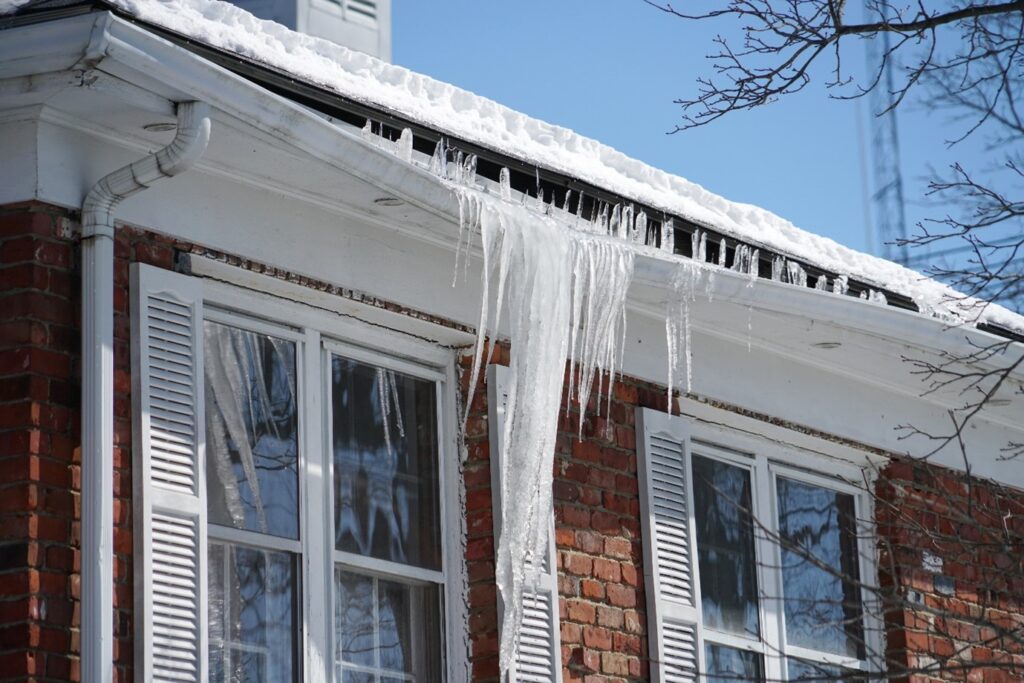
Freeze-thaw cycles are one of the biggest concerns for Ohio homes. Moisture can get behind damaged siding, then freeze and expand when temperatures drop.
Over time, that can affect:
- Siding seams
- Window and door trim
- Corners
- Wall sheathing
- Flashing areas
- Gaps near rooflines
This is why proper installation matters. Siding should not just be attached to the wall. It should be installed as part of a water-management system.
Understanding the Entire Siding System
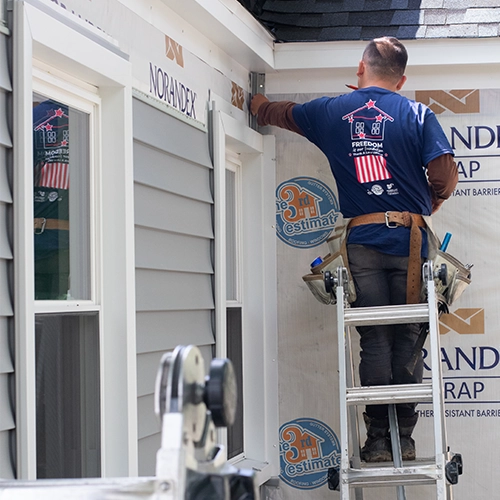
Siding panels are the part you see, but they are only one layer of protection. What goes underneath your siding is just as important as the siding material itself.
A complete siding system may include:
- Sheathing: The structural layer attached to your home’s framing.
- House wrap: A weather-resistant barrier that helps manage moisture.
- Flashing: Material that helps direct water away from windows, doors, rooflines, and other vulnerable areas.
- Insulation: Added material that can help improve comfort and energy efficiency.
- Trim: Finishing pieces around windows, doors, corners, and edges.
- Sealants: Products used in the right areas to help close small gaps.
Why is house wrap important under siding?
Siding is the first line of defense, but it is not the only one. House wrap helps protect the wall system if wind-driven rain, snow, or humidity gets behind the siding.
That extra layer matters in Northeast Ohio, where homes face moisture in nearly every season.
Why does flashing matter for siding installation?
Flashing protects the most vulnerable parts of your home’s exterior. It helps move water away from openings, seams, and transitions.
Flashing is especially important around:
- Windows
- Doors
- Roof-wall intersections
- Deck connections
- Utility openings
- Exterior trim details
Poor flashing is one of the most common causes of hidden siding damage. Water can enter slowly, which means rot, mold, or sheathing damage may build up before you notice a problem.
Signs It May Be Time for Siding Repair or Replacement
Siding damage is not always obvious. Some signs show up on the outside of the home. Others show up inside as comfort or moisture issues.
What are the exterior warning signs of siding damage?
Look for:
- Cracked siding
- Loose panels
- Warped areas
- Buckling
- Fading
- Mold or mildew stains
- Soft spots
- Rot near the bottom edges
- Gaps around trim
- Storm damage
- Missing pieces
What are the interior warning signs of siding damage?
Inside the home, siding issues may show up as:
- Drafts near walls
- Water stains
- Peeling paint
- Higher energy bills
- Musty smells
- Cold rooms
- Moisture near windows
If you notice several of these problems, it may be time to schedule an inspection.
Siding Repair vs. Siding Replacement in Ohio
Not every siding issue requires full replacement. In some cases, repair may be enough.
The right choice depends on the amount of damage, the age of the siding, and whether moisture has reached the layers underneath.
When does siding repair make sense?
Siding repair may be a good option when:
- Damage is limited to one area
- The rest of the siding is in good condition
- Matching materials are available
- There is no hidden moisture damage
- The siding is not near the end of its lifespan
A few cracked panels from storm debris may only need a small repair.
When is siding replacement the better choice?
Siding replacement may be smarter when:
- Damage appears on multiple sides
- The siding is old or brittle
- Repairs would not match
- Moisture has reached the sheathing
- Energy efficiency is a concern
- You want a full exterior update
If the siding is already failing, patching one area may only delay the larger project.
For homeowners ready to compare options, The Third Estimate offers professional siding replacement guidance based on the home’s actual condition.
Siding and Energy Efficiency for Ohio Homes
New siding can help improve home comfort when it is installed as part of a complete exterior system.
Siding works with insulation, house wrap, windows, doors, and air sealing. When those parts work together, your home may feel more comfortable in every season.
How does siding support home comfort?
New siding may help with:
- Reducing drafts
- Improving wall performance
- Limiting moisture intrusion
- Supporting better insulation
- Helping rooms feel more even
- Protecting vulnerable wall areas
It is important to be realistic. Siding alone will not solve every energy problem. But damaged siding can make comfort problems worse.
If your home feels drafty, has aging windows, or shows signs of exterior wear, it may be worth looking at the full exterior.
Siding Styles and Colors for Northeast Ohio Curb Appeal
Siding has a major impact on how your home looks. The style, color, texture, and trim can completely change the exterior.
What siding styles are popular for Ohio homes?
Popular siding styles for Ohio homes include lap siding, Dutch lap siding, board and batten, shake-style siding, vertical accents, mixed profiles, and decorative gable accents.
Here is how each style works:
- Horizontal lap siding: A classic option where panels overlap from bottom to top. This helps shed water away from the wall system.
- Dutch lap siding: Similar to lap siding, but with a small groove or shadow line for added depth.
- Board and batten siding: A vertical style with wide boards and narrow strips over the seams. It can make a home feel taller and more updated.
- Shake-style siding: A textured, decorative style often used on gables, dormers, or accent areas.
- Vertical siding accents: A good choice for entries, peaks, and front-facing sections.
- Mixed siding profiles: A way to combine two or more styles for more curb appeal.
- Decorative gable accents: Small design details that add character without changing the whole exterior.
Key takeaway: Many homeowners choose one main siding style, then add accents near entries, peaks, dormers, or front-facing sections so the exterior feels detailed but not too busy.
How should homeowners choose siding colors?
When choosing a siding color, start with the fixed features on your home.
Look at:
- Roof color
- Window frames
- Brick or stone
- Gutters
- Garage doors
- Front door color
- Trim
- Landscaping
For Northeast Ohio homes, timeless colors often work well. Soft grays, warm neutrals, deep blues, and earthy greens can feel updated without being too trendy. Homeowners who want a bolder exterior can also explore Verona Collection siding in deep, rich color for inspiration before choosing a final palette.
If you want personality, consider adding contrast through trim, shutters, or accent siding.
For more help planning the full exterior look, homeowners can also review The Third Estimate’s guide to Roof and Siding Color Combinations.
What to Expect During a Siding Replacement Project
A siding replacement project should feel clear and organized. Homeowners should know what is happening before work begins.
At The Third Estimate, communication is part of the project, not an afterthought.
What are the typical siding replacement steps?
Most siding replacement projects include:
- Inspection and estimate
Your siding, trim, windows, and problem areas are reviewed. - Material selection
You compare siding types, colors, profiles, and performance options. - Project planning
Measurements, materials, schedule, and expectations are confirmed. - Old siding removal
Existing siding is removed so the wall system can be checked. - Wall inspection
Sheathing and hidden damage are reviewed before new siding is installed. - House wrap and flashing
Protective layers are installed to help manage water. - New siding installation
Panels, trim, and details are installed according to product standards. - Cleanup and walkthrough
The property is cleaned, and the finished project is reviewed.
The timeline depends on the home’s size, material choice, weather, and any hidden repairs.
Siding Replacement Cost Factors in Ohio
Siding replacement in Ohio typically costs about $8,000 to $30,000+, depending on the size of the home, siding material, trim details, and any repairs needed underneath the existing siding. Vinyl siding is usually on the lower end, while fiber cement, engineered wood, composite siding, and more detailed exterior designs can cost more. National and regional cost guides commonly place installed vinyl siding at around $4 to $12 per square foot, while fiber cement often falls around $7 to $18 per square foot.
Common factors that can affect siding replacement cost include:
- Home size and layout
- Number of stories
- Siding material
- Trim, corners, and accent details
- Old siding removal
- Insulation upgrades
- Hidden sheathing or moisture damage
- Window and door details
- Project complexity
- Warranty options
A smaller vinyl siding project will usually cost less than a larger home with premium siding, mixed materials, detailed trim, or repairs behind the existing siding.
At The Third Estimate, we recommend starting with an inspection so you know what your home actually needs. That way, your estimate is based on your siding, your goals, and your home’s condition, not a generic price range.
Common Siding Mistakes Ohio Homeowners Should Avoid
Siding is a major home upgrade. A few mistakes can lead to costly problems later.
Avoid these common issues:
- Choosing the lowest bid without reviewing details
- Ignoring signs of water damage
- Installing new siding over rotten sheathing
- Skipping house wrap
- Using poor flashing details
- Choosing colors only from small indoor samples
- Forgetting how siding works with roof and window colors
- Hiring a contractor without local experience
- Waiting too long after storm damage
- Assuming all siding types perform the same way
Key takeaway: The best siding project is about the material, the installation, and the contractor standing behind the work.
How to Choose a Siding Contractor in Northeast Ohio
The right siding contractor should make the process easier, not more stressful. You want a team that explains your options clearly, respects your home, and does not make you feel pressured into a decision before you are ready.
Look for a contractor with:
- Local experience
- Strong homeowner reviews
- Clear estimates
- No-pressure inspections
- Transparent pricing
- Strong warranties
- Knowledge of Ohio weather
- Clear communication
At The Third Estimate, we have spent more than 30 years helping Northeast Ohio homeowners make confident exterior upgrades. With locations in Solon and Fairview Park, OH, we understand the homes, weather, and siding concerns that come with living in this area.
As a local team backed by strong certifications, The Third Estimate brings dependable standards to every project. More importantly, we believe homeowners deserve honest advice, clear communication, and a contractor who follows through.
Learn more about our team and the values behind The Third Estimate.
Best Time to Replace Siding in Ohio
Siding can often be replaced during much of the year, but timing matters.
Spring, summer, and fall are common times for siding replacement in Ohio because working conditions are usually easier.
However, you should not wait if your siding is damaged. If water is getting behind the siding, the problem can get worse during rain, snow, and freezing weather.
Should siding be replaced before winter?
If your siding is cracked, loose, or failing, replacing it before winter can help protect your home from snow, ice, and freeze-thaw damage.
This is especially important if you already see moisture stains, soft areas, or gaps around windows and doors.
Basic Siding Maintenance for Ohio Homeowners
Siding maintenance does not need to be complicated. A few simple habits can help your siding last longer.
What siding maintenance should homeowners do each season?
Use this checklist in spring and fall:
- Rinse siding once or twice a year
- Clean mildew before it spreads
- Trim shrubs away from the siding
- Check for cracks after storms
- Look for loose panels after high winds
- Keep gutters clean
- Watch for water near the foundation
- Inspect caulking around trim
- Look for pest activity
- Schedule an inspection if something looks wrong
In Northeast Ohio, seasonal checks are helpful because siding takes a beating from winter weather and summer storms.
Roofing, Windows, Gutters, and Siding Work Together
Your home’s exterior is a system. Siding does not work alone.
Roofing, windows, gutters, flashing, and siding all help move water away from your home. If one part is not doing its job, another part can be affected.
For example:
- Clogged gutters can send water down siding
- Poor window flashing can let water behind siding
- Roofline issues can stain or damage siding
- Drafty windows can affect wall comfort
- Damaged siding can allow moisture into the wall system
That is why it helps to work with a contractor who understands the full exterior, not just one piece of it. At The Third Estimate, we look at how your siding connects to your roofline, windows, gutters, trim, and insulation so you can make smart updates without guessing what matters most.
If you are still in the early planning stage, this exterior planning resource can help you start thinking through your home’s overall look and priorities.
FAQs About Siding Types for Ohio Homes
What siding type is best for Ohio homes?
The best siding type for Ohio homes depends on your goals. Vinyl is popular for its low maintenance and affordability. Insulated vinyl can support comfort. Fiber cement offers durability and curb appeal. Engineered wood and composite siding provide strong style options.
How long does siding last in Ohio?
Siding lifespan depends on the material, installation quality, weather exposure, and maintenance. Many siding products can last for decades when installed correctly. Harsh weather, poor flashing, and ignored damage can shorten that lifespan.
How do I know if siding has hidden water damage?
Signs of hidden water damage may include soft siding, swelling, mold, mildew, interior stains, peeling paint, or warped panels. A professional inspection can help determine whether the damage is surface-level or deeper.
Can siding and windows be replaced together?
Yes. Replacing siding and windows together can make sense because both affect the wall system, flashing, trim, and insulation. It can also create a cleaner finished look.
Does new siding increase home value?
New siding can improve curb appeal, protection, and buyer confidence. While value depends on the home and market, siding is often seen as a practical upgrade because it improves both appearance and function.
Schedule Your Free Estimate with The Third Estimate
The right siding can make your home look better, feel more comfortable, and stay better protected through Ohio weather. But the best results start with the right material, the right installation, and the right contractor.
The Third Estimate helps homeowners in Solon, Fairview Park, and throughout Northeast Ohio compare siding types for Ohio homes with clear guidance and no sales pressure.
With more than 30 years in business, 60,000+ satisfied homeowners, strong certifications, and a local team that stands behind the work, The Third Estimate is the kind of contractor you would recommend to a friend.
If your siding is cracked, faded, loose, drafty, or showing signs of moisture damage, now is a good time to take the next step.
Contact The Third Estimate to schedule your free estimate today.